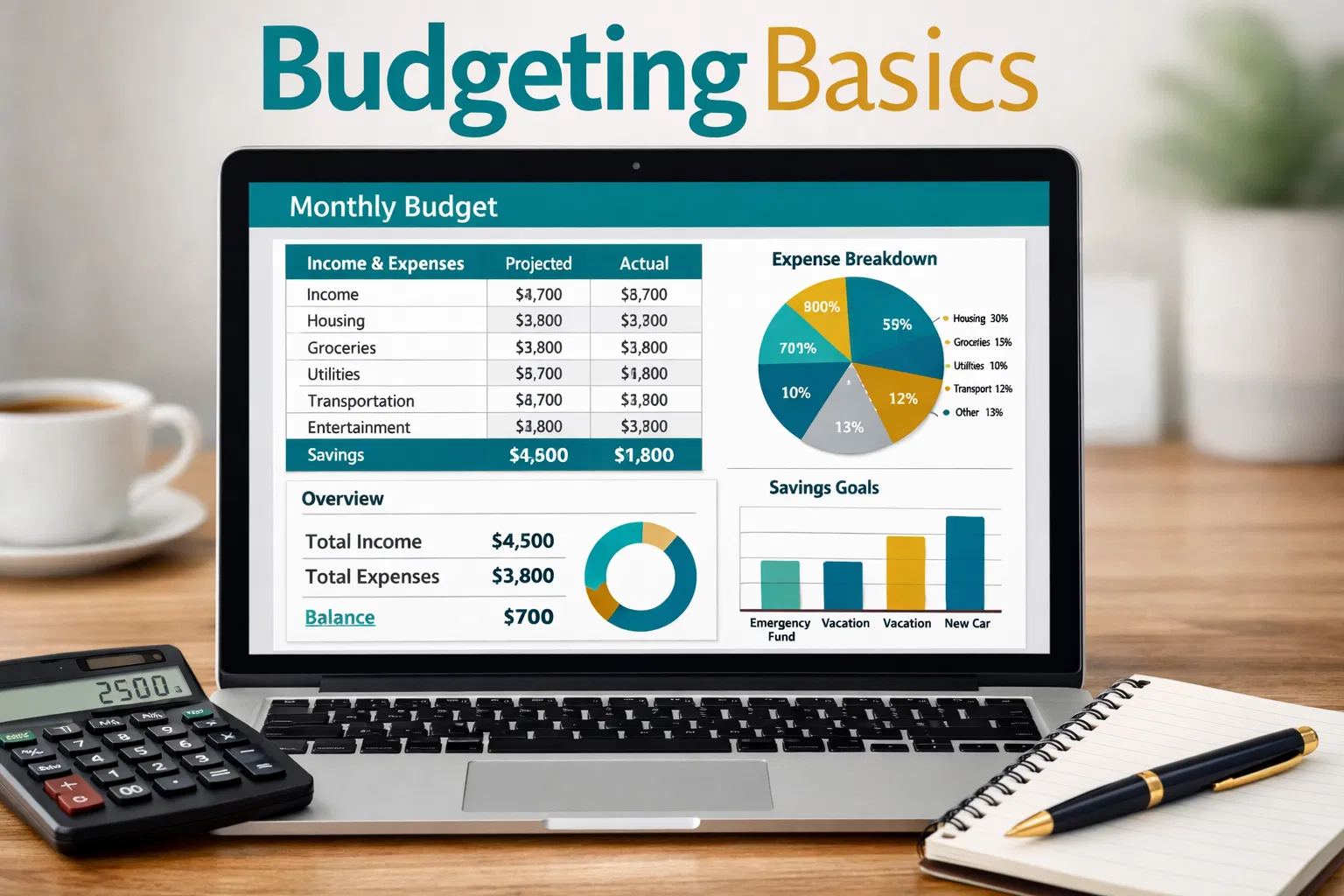
Budgeting Basics: Your First Step to Financial Control
A budget is simply a plan for your money. It tells you where your money comes from and where it goes. Creating a budget is the first step toward financial control and is surprisingly simple to do.
What is a Budget?
A budget is a written plan that shows your income and expenses. It helps you see how much money you have, how much you're spending, and where you can save. Think of it as a roadmap for your money. Without a budget, you're like a ship without a compass—you might end up anywhere.
Why You Need a Budget
A budget gives you control over your money instead of letting your money control you. It helps you avoid overspending, track your progress toward goals, and make informed decisions about your money. Students with budgets are more likely to have money left over at the end of the month instead of wondering where all their money went.
Step 1: Calculate Your Income
Start by writing down all the money you receive in a month. This might include pocket money from parents, income from a part-time job, scholarships, or money from a side hustle. Be realistic about this number—use your average monthly income, not a best-case scenario.
Step 2: List Your Expenses
Write down everything you spend money on in a month. Include fixed expenses like rent (if applicable), phone bills, and transportation. Also include variable expenses like food, entertainment, and shopping. Don't forget occasional expenses like birthday gifts or medical costs. Be honest and thorough.
Step 3: Categorize Your Expenses
Group your expenses into categories like food, transportation, entertainment, utilities, education, and personal care. This helps you see where your money is actually going. Many students are shocked when they realize how much they spend on food or entertainment.
Step 4: Calculate the Difference
Subtract your total expenses from your total income. If you have money left over, that's great—you can save or invest it. If you're spending more than you earn, you need to cut expenses or find ways to increase income.
Step 5: Make Adjustments
If you're overspending, look at your wants and see where you can cut back. Can you reduce entertainment spending? Can you cook at home instead of eating out? Can you use public transportation instead of taking cabs? Make small adjustments that add up to big savings.
Popular Budgeting Methods
The 50/30/20 rule allocates 50% to needs, 30% to wants, and 20% to savings. The zero-based budget allocates every rupee to a specific purpose. The envelope method uses physical envelopes for different spending categories. Choose the method that works best for you.
Budgeting Tools for Students
You don't need expensive software to budget. A simple spreadsheet works great. Many free apps like Google Sheets, Money Manager, or YNAB (You Need A Budget) can help you track your spending. Choose whatever tool you'll actually use.
Making Your Budget Work
The key to a successful budget is consistency. Review your budget monthly, track your spending, and adjust as needed. Don't be too rigid—life happens, and you need flexibility. But do stay committed to the overall plan.
Conclusion
Budgeting is not about restriction—it's about freedom. When you know where your money is going, you can make intentional choices. You can spend on things that matter to you without guilt because you've planned for it. Start budgeting today and take control of your financial life.
Related Articles
What is Personal Finance?
Understand the fundamentals of personal finance and why it matters for your future.
Why Students Should Manage Money Early
Discover why developing financial habits as a student sets you up for lifelong success.
Needs vs Wants: The Foundation of Smart Spending
Learn to distinguish between what you need and what you want to make smarter spending decisions.